Long-distance travel can be an exciting experience, whether you are planning an international vacation, a family visit, a business trip, or an extended adventure. However, preparing for a long journey requires careful planning, especially when deciding what to pack and how to organize your belongings.
Many travelers struggle with heavy suitcases, forgotten essentials, limited luggage space, and unnecessary baggage expenses. Packing without a proper plan can make traveling stressful and uncomfortable. Fortunately, a few practical strategies can help you organize everything efficiently and enjoy a smoother journey.
Following the right smart packing tips for travel allows you to save space, protect valuable belongings, and carry everything you genuinely need. From choosing suitable luggage to organizing clothing and preparing essential accessories, every small decision can improve your travel experience.
In this guide, you will discover practical packing techniques, useful travel essentials, and effective strategies to prepare for comfortable long-distance journeys.
1. Create a Travel Packing Checklist
The first step toward successful packing is creating a detailed checklist. Many travelers forget important belongings because they begin packing at the last minute or rely entirely on memory.
Start by considering your destination, journey duration, expected weather, and planned activities. These factors will help you determine which belongings are necessary.
Organize your checklist into different categories:
- Clothing and footwear
- Travel documents and identification
- Toiletries and personal care products
- Electronic devices and chargers
- Essential medication
- Travel comfort accessories
- Weather-specific items
Review your checklist before closing your suitcase. This simple habit helps prevent forgotten essentials and reduces unnecessary packing.
2. Choose the Right Luggage for Your Journey
Selecting suitable luggage is important for comfortable long-distance travel. Your suitcase should provide enough storage space while remaining easy to carry and manage.
Different luggage options are suitable for different travel requirements.
Carry-on suitcase: Useful for essential belongings and shorter journeys.
Checked luggage: Suitable for extended trips requiring additional clothing and personal items.
Travel backpack: A practical option for travelers visiting multiple destinations.
Duffel bag: Provides flexible storage for casual journeys and lightweight packing.
Choose luggage with durable materials, reliable zippers, comfortable handles, and useful compartments.
Before departure, check your airline’s baggage dimensions and weight restrictions to avoid unexpected charges.
3. Pack Versatile Clothing Instead of Too Many Outfits
Clothing often takes up the largest amount of suitcase space. Packing separate outfits for every day can quickly make your luggage unnecessarily heavy.
Instead, choose versatile clothing that can be combined in different ways.
For example, neutral-colored shirts, comfortable trousers, and a lightweight jacket can create several outfit combinations without requiring too many individual pieces.
Consider these practical clothing tips:
- Choose lightweight and breathable fabrics.
- Pack clothes that match multiple outfits.
- Avoid unnecessary duplicate items.
- Include comfortable travel clothing.
- Carry appropriate footwear.
- Consider the weather at your destination.
If laundry facilities are available during your trip, you may be able to reduce the amount of clothing you need to carry.
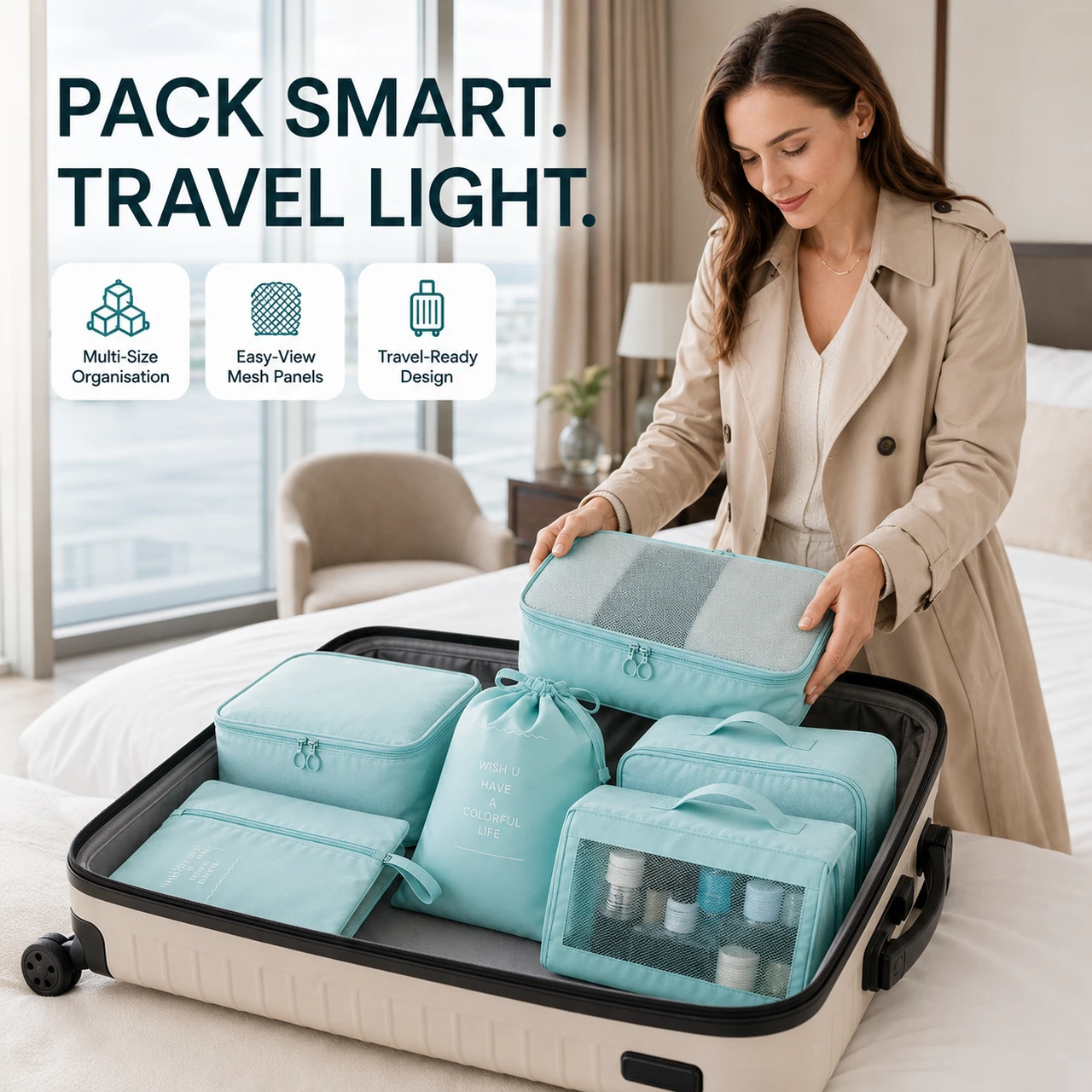
4. Use Packing Cubes to Organize Your Suitcase
Packing cubes are useful accessories for keeping luggage organized. They separate different types of clothing and make it easier to locate belongings without unpacking everything.
You can organize your suitcase using separate compartments for:
- Shirts and tops
- Trousers and jeans
- Underwear and socks
- Sleepwear
- Accessories
Rolling lightweight clothing can also help organize available space. Place smaller soft items inside unused suitcase corners and keep shoes in separate bags.
These techniques are particularly useful when traveling between multiple hotels or destinations.
5. Keep Important Travel Documents Accessible
Travel documents are essential during long-distance journeys. Losing access to your passport, identification, or transportation details can create unnecessary complications.
Prepare a dedicated document organizer containing:
- Passport and identification
- Flight or transportation tickets
- Hotel reservation details
- Visa documents, if required
- Travel insurance information
- Emergency contact details
Keep important documents inside your personal bag rather than checked luggage.
You can also maintain secure digital copies of essential documents so they remain accessible when needed.
6. Prepare a Separate Carry-On Essentials Bag
During long-distance travel, your main suitcase may not be accessible for several hours. A separate carry-on bag allows you to keep frequently needed belongings nearby.
Useful items include:
- Smartphone and charging cable
- Headphones or earphones
- Power bank permitted by your carrier
- Passport and travel documents
- Essential medication
- Tissues and hand sanitizer
- Reusable water bottle
- Light snacks
- Eye mask and earplugs
Keep your carry-on organized so important belongings are easy to find during transportation.
7. Organize Toiletries and Personal Care Products
Personal care products are important for maintaining comfort during extended journeys. However, carrying full-sized containers can consume valuable luggage space.
Choose travel-sized containers for frequently used products such as shampoo, conditioner, moisturizer, and face wash.
A waterproof toiletry bag helps prevent accidental spills from damaging clothing or electronic accessories.
Other useful personal care items include toothbrushes, toothpaste, deodorant, sunscreen, and basic hygiene supplies.
If you are traveling by airplane, check the applicable liquid restrictions before packing toiletries in your cabin baggage.
8. Protect Electronics and Valuable Belongings
Electronic devices are important travel companions. Smartphones, laptops, tablets, and cameras help travelers communicate, work, navigate, and capture memories.
Use a dedicated electronics organizer to keep accessories together.
Follow these simple precautions:
- Carry valuable electronics in your personal bag.
- Use protective cases for fragile devices.
- Keep charging cables organized.
- Back up important photographs and documents.
- Carry suitable international power adapters.
- Check airline rules for batteries and power banks.
Proper organization helps protect your devices and reduces the chances of forgetting important accessories.
9. Prepare for Changing Weather Conditions
Weather conditions can change unexpectedly, especially when visiting multiple destinations.
Before departure, check the forecast and select clothing according to the expected temperatures.
For warm destinations, lightweight clothing, sunglasses, and sun protection may be useful. For colder regions, consider jackets, warm socks, and suitable footwear.
A few additional items may include:
- Compact umbrella
- Lightweight rain jacket
- Comfortable walking shoes
- Extra socks
- Weather-appropriate accessories
Layering is often more practical than carrying several heavy outfits because you can adjust your clothing throughout the day.
10. Avoid Overpacking Unnecessary Items
Overpacking is one of the most common travel preparation mistakes. Many people carry additional clothes, duplicate accessories, and products they never actually use.
Before closing your suitcase, review every item and ask yourself whether it is genuinely necessary.
Consider these questions:
- Will I use this item during my trip?
- Can it serve more than one purpose?
- Do I already have something similar?
- Can I purchase it at my destination?
- Is it necessary for my planned activities?
Removing unnecessary belongings makes luggage lighter and easier to manage.
Leaving some additional space is also helpful if you plan to purchase souvenirs during your journey.
11. Keep Medication and Health Essentials Organized
Travelers who regularly use medication should prepare their supplies carefully before departure.
Keep essential medication in its original packaging whenever possible and carry prescriptions or supporting documentation when required.
A small travel health kit may include:
- Regular medication
- Prescription information
- Adhesive bandages
- Basic first-aid supplies
- Personal hygiene essentials
Check destination regulations for medicines before international travel.
Always keep essential medication in your personal bag rather than relying entirely on checked luggage.
12. Check Your Luggage Weight Before Departure
Unexpected baggage fees can increase travel expenses and create unnecessary airport delays.
Before leaving home, check your airline’s baggage allowance and weigh your suitcase.
Remember that checked baggage and cabin baggage may have different weight and size restrictions.
A portable luggage scale can help you monitor suitcase weight before departure and during your return journey.
13. Complete Your Packing the Night Before
Leaving packing until the last minute can create confusion and increase the chances of forgetting important belongings.
Try to finish most of your preparations the night before departure.
Charge electronic devices, organize travel documents, prepare your carry-on bag, and confirm your transportation arrangements.
Before leaving home, make sure:
- All travel documents are ready.
- Tickets and reservations are confirmed.
- Suitcase weight meets the permitted limit.
- Electronic devices are charged.
- Essential medication is accessible.
- Toiletries are properly secured.
- Important belongings are organized.
A final review can help you begin your journey with greater confidence.
Common Packing Mistakes to Avoid
Even experienced travelers sometimes make mistakes that affect their comfort and travel arrangements.
| Common mistake | Practical solution |
|---|---|
| Packing too many clothes | Choose versatile outfits |
| Ignoring baggage restrictions | Check airline policies |
| Mixing clean and used clothes | Carry a laundry bag |
| Packing documents in checked luggage | Keep them in your personal bag |
| Carrying oversized toiletries | Use travel-sized containers |
| Forgetting charging accessories | Prepare an electronics checklist |
| Packing at the last minute | Organize luggage in advance |
| Ignoring destination weather | Check the forecast |
Avoiding these mistakes can make your packing routine more efficient and organized.
Complete Packing Checklist for Long-Distance Travel
Before closing your suitcase, review this final checklist.
Travel Documents
- Passport and identification
- Transportation tickets
- Visa documents
- Hotel reservations
- Travel insurance
Clothing and Footwear
- Everyday outfits
- Comfortable travel clothing
- Underwear and socks
- Sleepwear
- Appropriate shoes
- Weather-specific clothing
Personal Care
- Toothbrush and toothpaste
- Shampoo and skincare products
- Deodorant
- Personal hygiene supplies
- Basic first-aid items
Electronics
- Smartphone
- Phone charger
- Power bank
- Headphones
- Laptop or tablet
- Travel adapter
Travel Comfort
- Neck pillow
- Eye mask
- Earplugs
- Reusable water bottle
- Light snacks
Luggage Preparation
- Check suitcase weight
- Secure luggage
- Add luggage identification
- Organize packing cubes
- Separate used clothing
- Keep essential belongings accessible
Conclusion
Packing smart for long-distance travel is about preparation, organization, and choosing the right essentials. A well-organized suitcase can help you save space, reduce unnecessary luggage weight, and enjoy a more comfortable journey.
By following these smart packing tips for travel, you can prepare your belongings efficiently, protect valuable items, and avoid common travel preparation mistakes.
